

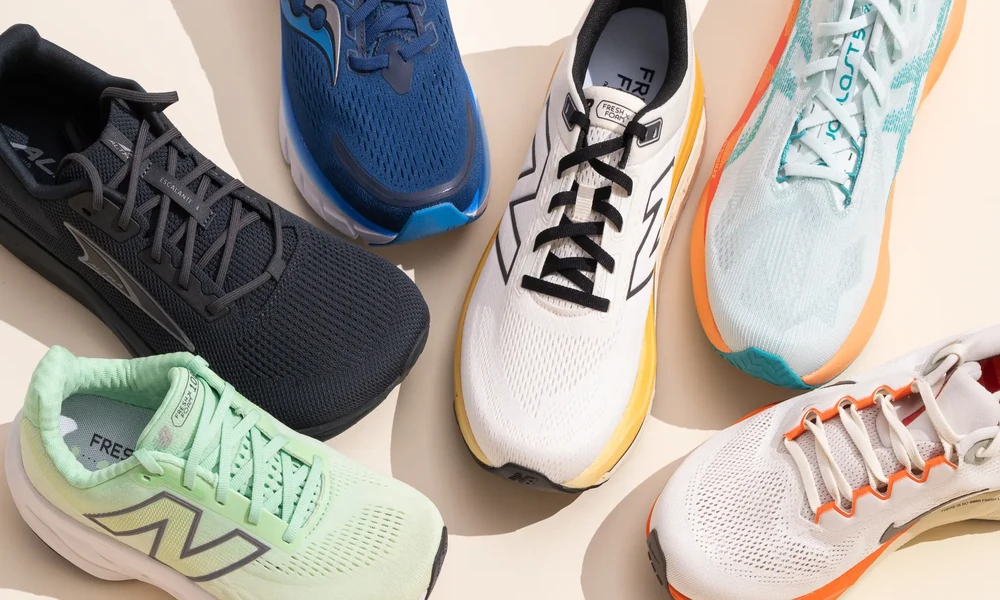
Two out of three people are wearing shoes that do not actually fit their feet. That is not runner lore. That is the conclusion of a 2018 systematic review published in the Journal of Foot and Ankle Research. So before you spend $180 on a pair of carbon-plated shoes because a YouTube reviewer said it changed their life, it is worth asking whether you know your actual foot dimensions at all.
Brand matters less than you think. Cushioning stack height matters less. What matters, in almost every case, is whether the shoe matches the three variables that make your foot unique: length, width, and arch profile. Get those right and most mid-tier shoes will serve you well. Get them wrong and a premium shoe will just wreck your feet in a more expensive way.
The Fit Problem Nobody Talks About
Between 63 and 72 percent of participants in footwear studies were wearing shoes that did not accommodate either the width or length dimensions of their feet, according to researchers at La Trobe University’s Sport and Exercise Medicine Research Centre, whose 2018 systematic review in the Journal of Foot and Ankle Research pooled data from 18 published studies on incorrectly fitted footwear. That is a staggering majority, and most of those people have no idea anything is wrong because their feet have simply adapted over years of compression and friction.
The more alarming part? Incorrect footwear fitting was associated with foot pain and disorders such as lesser toe deformity, corns, and calluses. These are not dramatic injuries. They creep in slowly, and by the time you notice them, the pattern has usually been going on for years.
Width is the biggest blind spot. Shoe sizing systems were built around foot length, so most people know their length but have never measured their width. A shoe that is too narrow in the toe box forces the toes to compress inward on every stride. Multiply that by 1,500 foot strikes per mile, and you are looking at a lot of repetitive pressure in exactly the wrong place.
The F.I.T. Framework: Three Variables, One Decision
Here is a simple framework to run your next shoe purchase through before you get anywhere near a checkout. I call it F.I.T.: Footprint, Impact pattern, Timing of the shop.
Footprint means your actual foot shape on a hard floor. Wet your foot, step on a piece of brown paper, and look at what you see. A wide, barely-arched print means you pronate and need a structured, supportive midsole. A narrow print with a large gap in the middle means a high arch with less natural shock absorption, which usually points toward a neutral shoe with serious cushioning. A middle-of-the-road print means you have more flexibility in your choice.
Impact pattern means where your foot strikes the ground first and where your old shoes show the most wear. Flip your last pair over right now. Heavy wear on the outer heel with relatively fresh midfoot? Classic heel striker. Wear spread across the ball of the foot? More of a forefoot runner. Your impact pattern is how you actually run, not how you think you run, and a shoe built for a different pattern will fight your gait on every single stride.
Timing of the shop is the one nobody follows. Shop for running shoes late in the afternoon or after a short walk, not at 9 a.m. on a Saturday. Your feet swell during the day, and they swell further during a run. A shoe that fits perfectly on a cold, morning foot will feel like a vice grip at mile eight. There should be roughly a thumb’s width of space between your longest toe and the end of the shoe when you are standing upright, bearing your full weight.
A Data Table: Shoe Fit Variables vs. Common Symptoms
This table maps specific fit problems to the symptoms they tend to produce. Use it as a diagnostic, not a diagnosis.
| Fit Problem | Common Symptom | What to Adjust |
|---|---|---|
| Toe box too narrow | Pinky-toe blisters, tingling in toes | Go a half-width wider; try 2E or wide sizing |
| Shoe too short | Black or bruised toenails after long runs | Size up half a size; buy in the afternoon |
| Heel cup too wide | Heel blisters, slipping at the back | Try a runner’s loop lacing; seek a narrower heel cup |
| Wrong arch support | Lateral ankle pain or collapsed arch feeling | Match shoe type to wet-foot arch print result |
| Too much cushioning for gait | Knee discomfort, heavy feeling at pace | Try a lower-stack shoe; reassess impact pattern |
The Saturday Test (A Scenario Most Runners Recognize)
Picture this: you buy a new pair of shoes on a Tuesday, wear them around the house Thursday, and take them out for an easy five-miler Saturday morning. They feel fine for the first two miles. By mile four, the outside of your right knee is complaining. You blame your training volume. You foam roll. You rest a week. Then you do it again.
This is the Saturday Test, and it is how most runners discover a shoe problem the expensive way. The early miles in a new shoe feel fine because the shoe is compensating for its own stiffness. As you fatigue, your foot settles into its natural position, and if that position conflicts with the shoe’s geometry, the stress transfers up the kinetic chain to your ankle, knee, or hip.
The fix is counterintuitive: trust mile four more than mile one. If a shoe that felt good in the store feels wrong on a long run, it is the wrong shoe. Return it. The second run is a more honest test than any amount of in-store walking on carpet.
When to Stop Experimenting and Get a Real Assessment
There is a ceiling to what self-assessment can tell you. About 65 percent of regular runners get hurt each year, and it is estimated that the average runner sustains one injury for every 100 hours of running, according to Yale Medicine’s orthopedics team. When pain follows you from shoe to shoe regardless of brand or model, the problem is almost certainly biomechanical rather than purely about fit.
That is the moment to talk to a specialist rather than order another pair online. Runners in Kentucky who keep cycling through shoes without relief often find that seeing Louisville Podiatry specialists surfaces the actual root cause, whether that is gait mechanics, a structural issue, or a need for custom orthotics that no off-the-shelf shoe can replicate.
A podiatric assessment can reveal things no footwear survey will catch: leg-length discrepancy, overpronation severity, plantar fasciitis forming before it becomes symptomatic, or a toe alignment issue that makes every shoe feel wrong in the same way. Getting that information once costs far less, in both money and pain, than three or four years of trial and error at the running store.
“You need the right preparation to be a safe runner and avoid injuries,” says Dr. Elizabeth Gardner, an orthopedic surgeon at Yale Medicine who specializes in sports medicine. She specifically recommends getting fitted for sneakers at a specialty store and balancing running with cross-training to reduce injury risk.
A Short Checklist Before Your Next Purchase
- Measure both feet standing up, late in the day, with your running socks on.
- Do the wet-paper test to confirm your arch type before you touch a shoe wall.
- Check your old shoes for wear pattern before buying the same model again.
- Confirm a thumb’s width of space between your longest toe and the shoe’s end.
- Walk and jog in the store; ignore how the shoe looks and pay attention to where it presses.
- If the same symptom returns across multiple shoe models, book a gait assessment with a foot specialist rather than guess again.
Good shoes do not guarantee pain-free running, but bad-fitting ones virtually guarantee the opposite. Start with the fit. Everything else is a detail.
