

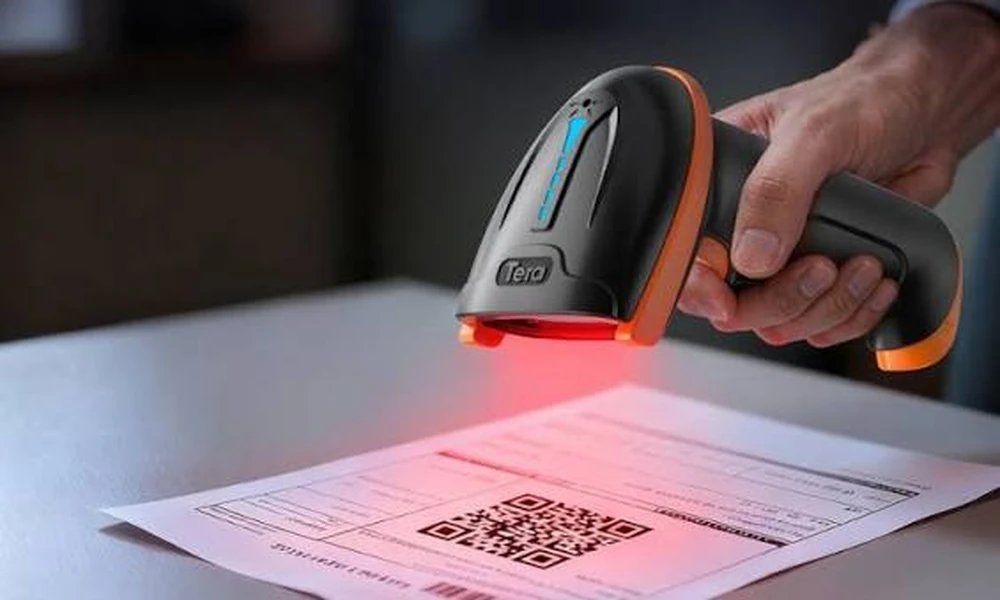
Four seconds. That’s how much longer one beat-up scan can take when a label is creased and the handheld is three years past its last cleaning. Multiply it by 1,400 scans a shift at a busy store and you’ve lost an hour and a half of throughput without a single person calling in sick.
Most operators treat scanning as plumbing. It’s there, it works, nobody thinks about it. Then a busy Saturday hits, half your handhelds start double-reading labels, and the checkout line backs up past the impulse coolers. Barcode service is unglamorous until it’s the only thing standing between you and a full parking lot of annoyed customers. Teams that run tight operations tend to lean on managed barcode and point of sale solutions so the hardware, the labels, and the support all stay in one set of hands instead of three.
The hidden cost of a slow scan
Here’s the part that surprises people: your scanner doesn’t fail all at once. It decays. The window gets scratched. The internal settings drift after a firmware push nobody documented. A new shipment of labels arrives with slightly different contrast, and suddenly your older devices need two tries on every third unit.
I’ve watched a receiving dock lose a full crew hour every morning because the check-in scanner was set to a symbology the supplier’s labels didn’t use. Nobody caught it for six weeks. Everyone assumed the dock was just slow.
So before you buy anything, time it. Pick one scan-heavy station and count how often an operator has to re-present a label. If it’s more than a couple times a minute, you’ve found your leak.
Reading the labels your suppliers actually send
Barcodes aren’t a free-for-all. The standards behind them are maintained by GS1, the organization that governs product identification and the symbol families most retail and logistics systems rely on. That matters to you because a scanner configured for one label family can choke on another, and your suppliers rarely coordinate their printing.
Walk your dock or back room and collect ten empty cartons. Look at the labels. Are they the same style? Same size? Printed with the same level of darkness? You’ll probably find a mix, and that mix is why your team keeps whispering about “that one scanner.”
Three things to check on every label
- The bars are crisp, not fuzzy at the edges
- The quiet zone on each side is clear, with no tape or tape seam running through it
- The label sits flat, not wrapped around a curve or crinkled
Fix the labels first. It’s cheaper than replacing devices and it solves a surprising share of read failures.
When to repair, replace, or hand it off
Decision paralysis costs more than a bad purchase. Use this table and stop debating.
| Situation | What I’d do | Why |
|---|---|---|
| One station fails intermittently, others fine | Swap the device, keep it as a spare | Isolates the fault without a purchase |
| Same failure across five or more units | Configuration or label problem, not hardware | You’d be buying your way into the same bug |
| Devices past end of support with no spares | Move to a managed refresh | Downtime risk is now a budget line, not a surprise |
| One location, low scan volume, tight budget | Buy refurbished, self-maintain | Managed coverage won’t pay for itself |
The managed route wins when your scanners live in many places and you don’t have a technician on site. If you run two registers in one shop, it probably doesn’t. Be honest about which one you are.
What the handoff should actually include
A support contract that only covers replacement hardware is half a service. What you want spelled out is who owns the setup, the spares pool, and the label specification. According to the Bureau of Labor Statistics, warehousing and storage employment has grown substantially over the past decade, and more hands touching more devices is exactly how configuration drift spreads.
Ask any provider these questions before signing:
- Who configures a new device before it ships, and do you keep a record of the settings?
- How fast does a spare arrive, and is it already programmed for my label set?
- Do you review my label stock and printer settings, or only the scanners?
- What’s the escalation path when a device fails during peak hours?
- Can I see the asset list, including serial numbers and install dates?
If the answers are vague, keep shopping. A provider that can’t describe its own spare pool will not rescue you at 7 a.m. on a Saturday.
Point of sale deserves the same scrutiny
Your checkout lane is a scanning environment with worse ergonomics than your dock. Cashiers scan at odd angles, the window film collects grit, and a failure there is visible to every customer in line.
The National Institute of Standards and Technology has long worked on measurement and verification practices that underpin technology reliability testing, and the same discipline applies to your lane: test, record, repeat. Set a monthly five-minute check where a manager scans a known problem label at each register and logs whether it read on the first try. It sounds fussy. It catches failures before your customers do.
The 30-minute audit you can run this week
Grab a clipboard and a stopwatch.
Minutes 0 to 10: pick your three busiest scan points and count re-scans for ten minutes each. Write the numbers down.
Minutes 10 to 20: collect five labels from each station and photograph them side by side. Note differences in size, print darkness, and placement.
Minutes 20 to 30: write down every device’s age, model, and whether a spare exists on site. Mark anything past end of support.
That’s it. You now have a prioritized list instead of a vague feeling that “scanning is slow.” Bring it to any vendor conversation and you’ll get a real answer instead of a brochure.
Where this leaves you
Scanning speed is a decision you’re already making, whether or not you’re paying attention to it. The audit costs you half an hour. The alternative is another season of apologizing to customers and re-scanning the same label twice.
Run the three-station count this week. If your re-scan rate makes you wince, that’s your answer on whether it’s time to stop self-maintaining and hand the fleet to someone who measures it. What’s your number?
